Dr. Yvonne Nguyen · Dermatology Conditions

Skin Cancer & Prevention

When detected early, the vast majority of skin cancers are highly treatable.

Approximately two in three Australians will be diagnosed with some form of skin cancer by age seventy, one of the highest rates in the world, reflecting our outdoor culture, predominantly fair-skinned population, and intense UV environment. Most skin cancers detected early have excellent outcomes, and the specialist tools available for early detection have never been more precise.

Basal cell carcinoma (BCC) is the most common skin cancer in Australia, arising from basal cells in the epidermis and most commonly appearing on sun-exposed areas such as the face, scalp, neck, and hands. BCCs very rarely spread to other parts of the body, but can cause significant local tissue destruction if untreated.

Squamous cell carcinoma (SCC) can spread to lymph nodes and beyond, particularly when arising on the lip or ear, or in immunosuppressed patients. Actinic keratoses, rough scaly patches on sun-damaged skin, are recognised SCC precursors and warrant active management.

Melanoma is the most serious form: less common than BCC and SCC but carrying the greatest risk of spread if not detected early. Australia has one of the highest melanoma rates globally.

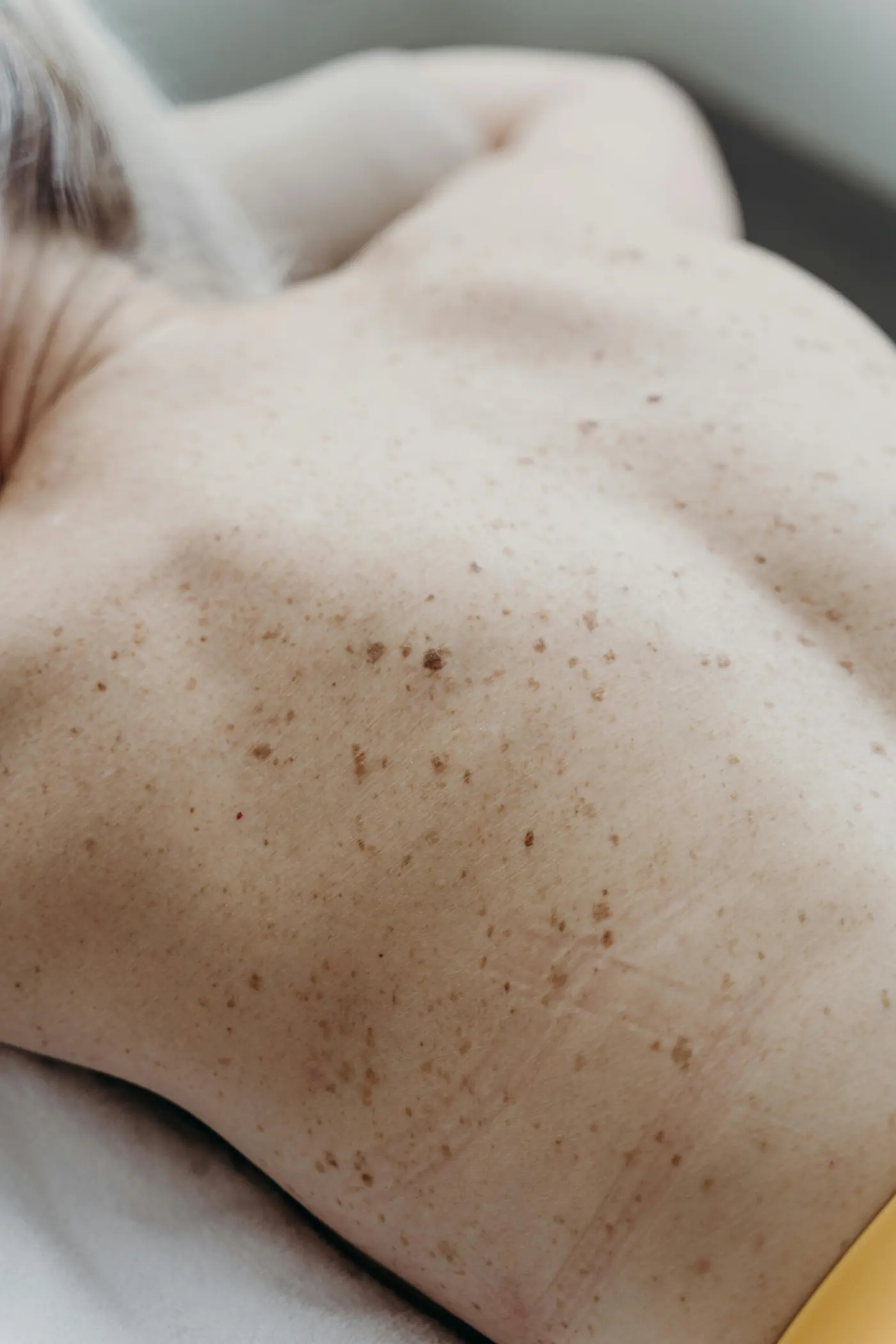
Dermatology skin check image representing skin cancer screening and prevention

01

Clinical assessment

Causes & Diagnosis

Cumulative UV radiation is the primary cause of all three major skin cancer types. Episodic intense exposure, particularly sunburning in childhood and adolescence, significantly elevates melanoma risk. People with fair skin, red or blonde hair, light eyes, and a tendency to burn are at highest risk, though skin cancer affects all skin types. Additional risk factors include personal or family history of skin cancer, a large number of moles or atypical (dysplastic) moles, immunosuppression, and a history of actinic keratoses.

How is it diagnosed?

Dermoscopy, which involves non-invasive magnified, polarised light examination, is the standard of care for skin lesion assessment. In experienced hands it significantly improves diagnostic accuracy over the naked eye. Suspicious lesions are biopsied under local anaesthetic and assessed histopathologically. For melanoma, Breslow thickness and other histological features determine staging and further management. Photography and sequential dermoscopic monitoring are used for patients with multiple atypical lesions or a strong personal or family history.

02

Personalised plan

Treatment Options

Surgical excision under local anaesthetic is first-line for most skin cancers, with margins guided by tumour type, size, site, and histological subtype.

Mohs micrographic surgery allows real-time margin assessment during the procedure, offering the highest cure rates for high-risk BCCs and SCCs, particularly on cosmetically sensitive areas such as the nose, eyelids, ears, and lips, while preserving as much healthy tissue as possible.

Non-surgical treatments for selected BCCs and SCCs include topical therapies (imiquimod, 5-fluorouracil), photodynamic therapy (PDT), radiotherapy, and curettage and electrocautery for low-risk superficial lesions.

Advanced and metastatic disease is managed in a multidisciplinary setting. Checkpoint immunotherapy, including pembrolizumab and nivolumab, and BRAF/MEK-targeted therapies are available in Australia for eligible patients with advanced melanoma and have achieved outcomes that were unimaginable a decade ago.

Ongoing surveillance following any skin cancer diagnosis is essential, as the risk of a subsequent skin cancer is substantially elevated, and regular specialist review provides the best opportunity for early detection.

When detected early, the vast majority of skin cancers are highly treatable. The most important thing you can do is make regular skin checks part of your healthcare routine.

03

Daily support

Management & Self-Care

  • Apply SPF 50+ broad-spectrum sunscreen to all exposed skin every day, not just at the beach or in summer
  • Reapply every two hours during outdoor activity, and after swimming or sweating
  • Seek shade between 10am and 3pm; wear sun-protective clothing, a broad-brimmed hat, and wrap-around sunglasses
  • Check your skin monthly for new or changing lesions using the ABCDE guide (Asymmetry, Border, Colour, Diameter, Evolving)
  • Report any suspicious change promptly, as a spot that bleeds, fails to heal, or simply doesn't look right warrants assessment

04

Specialist review

See a Dermatologist If

  • You haven't had a skin check in the past 12 months, particularly with a history of significant sun exposure, prior skin cancer, or a family history of melanoma
  • You have a new, changing, or unusual lesion anywhere on the body
  • A mole or spot has changed in size, shape, colour, or started to bleed or itch
  • You have multiple moles, atypical moles, or a history of blistering sunburns
  • You have ever used a solarium or worked outdoors for extended periods

Discuss Skin Cancer & Prevention with Dr. Nguyen

Sources and further reading

These external resources provide general educational information and do not replace individual medical advice.